I’m Sorry to Burst Your Bubble: You Are Being Fooled About AI, and You Will Soon Feel Really Stupid
Excerpt:
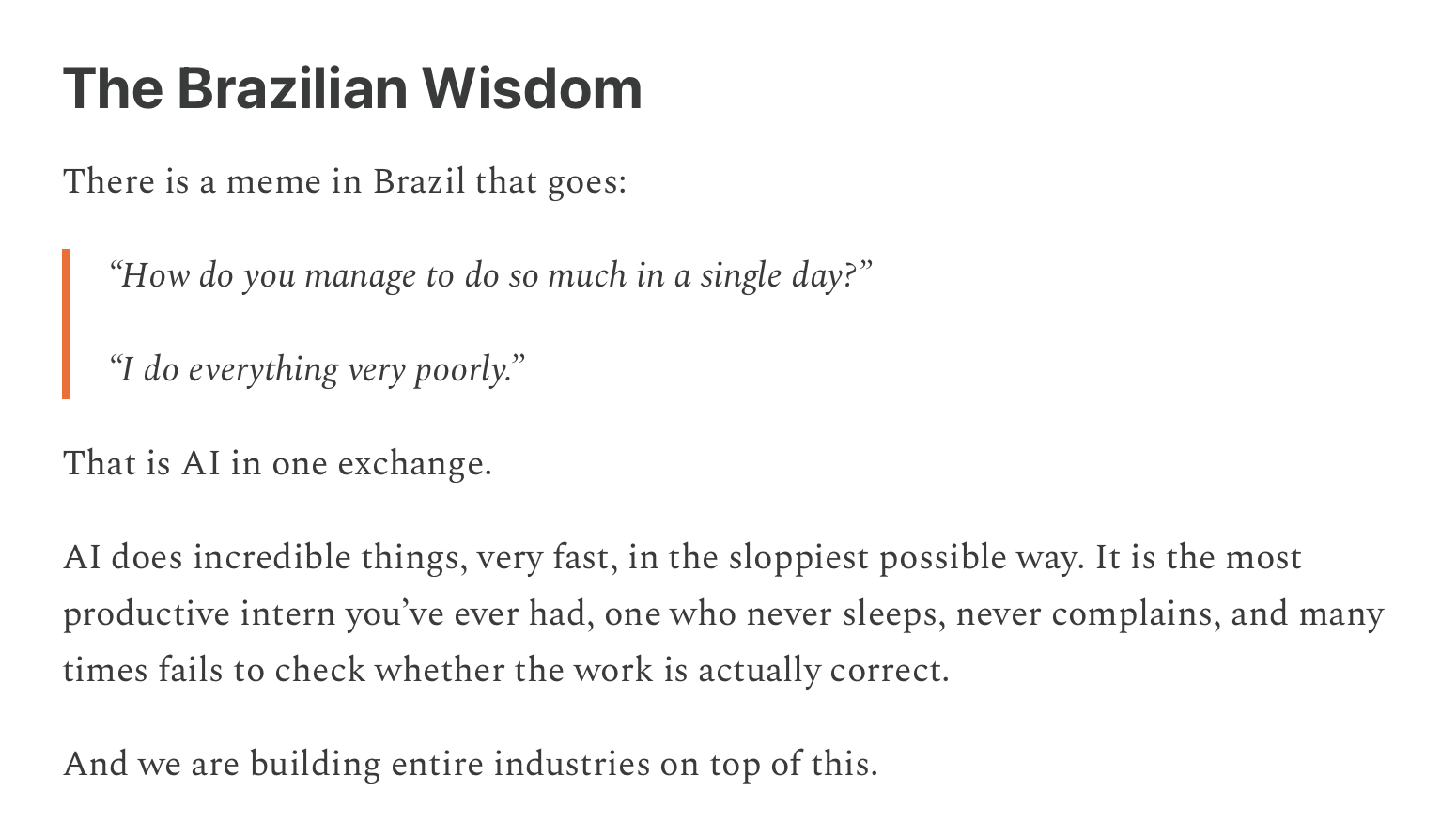
Claude. AI Response
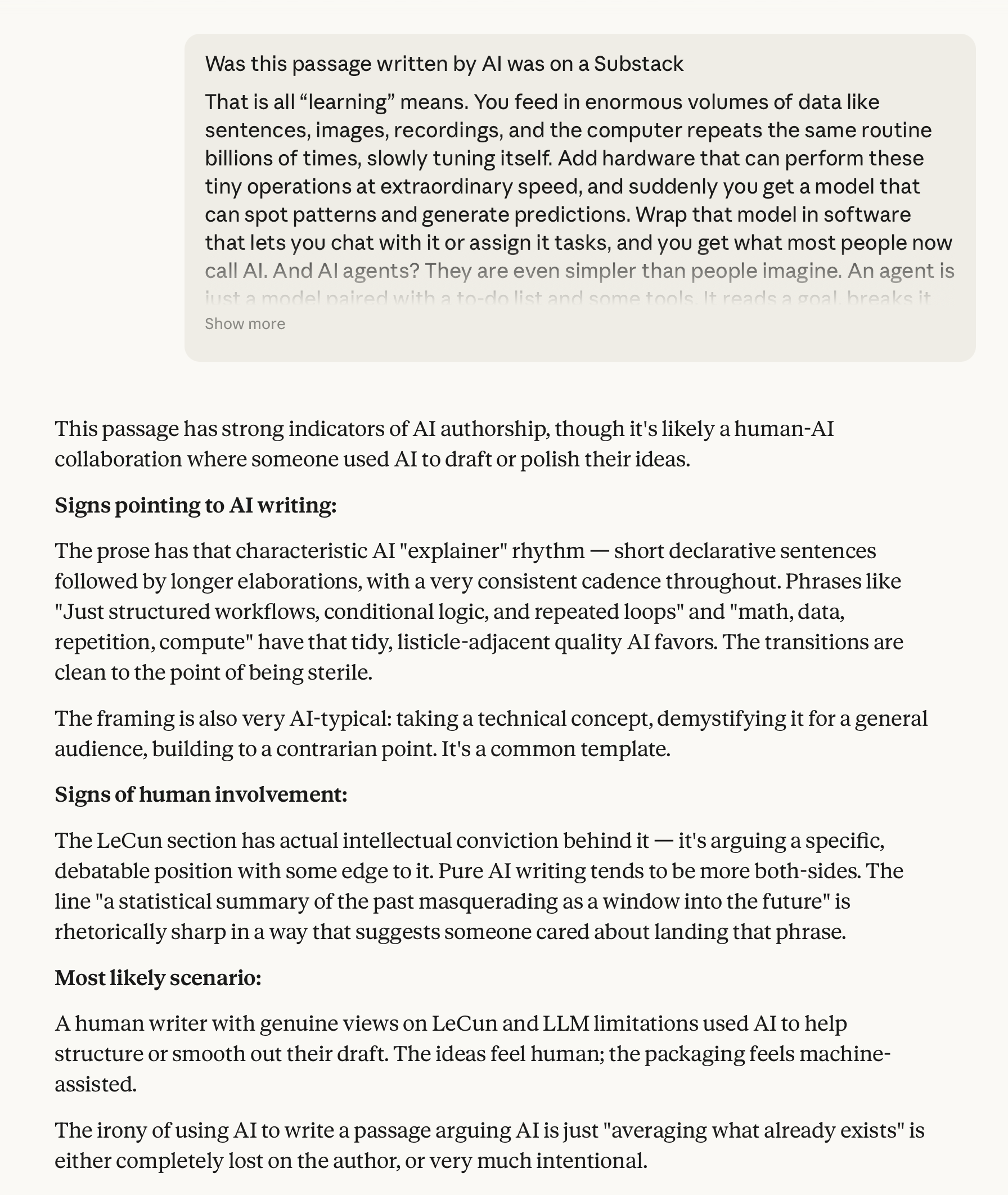
Claude. AI Response
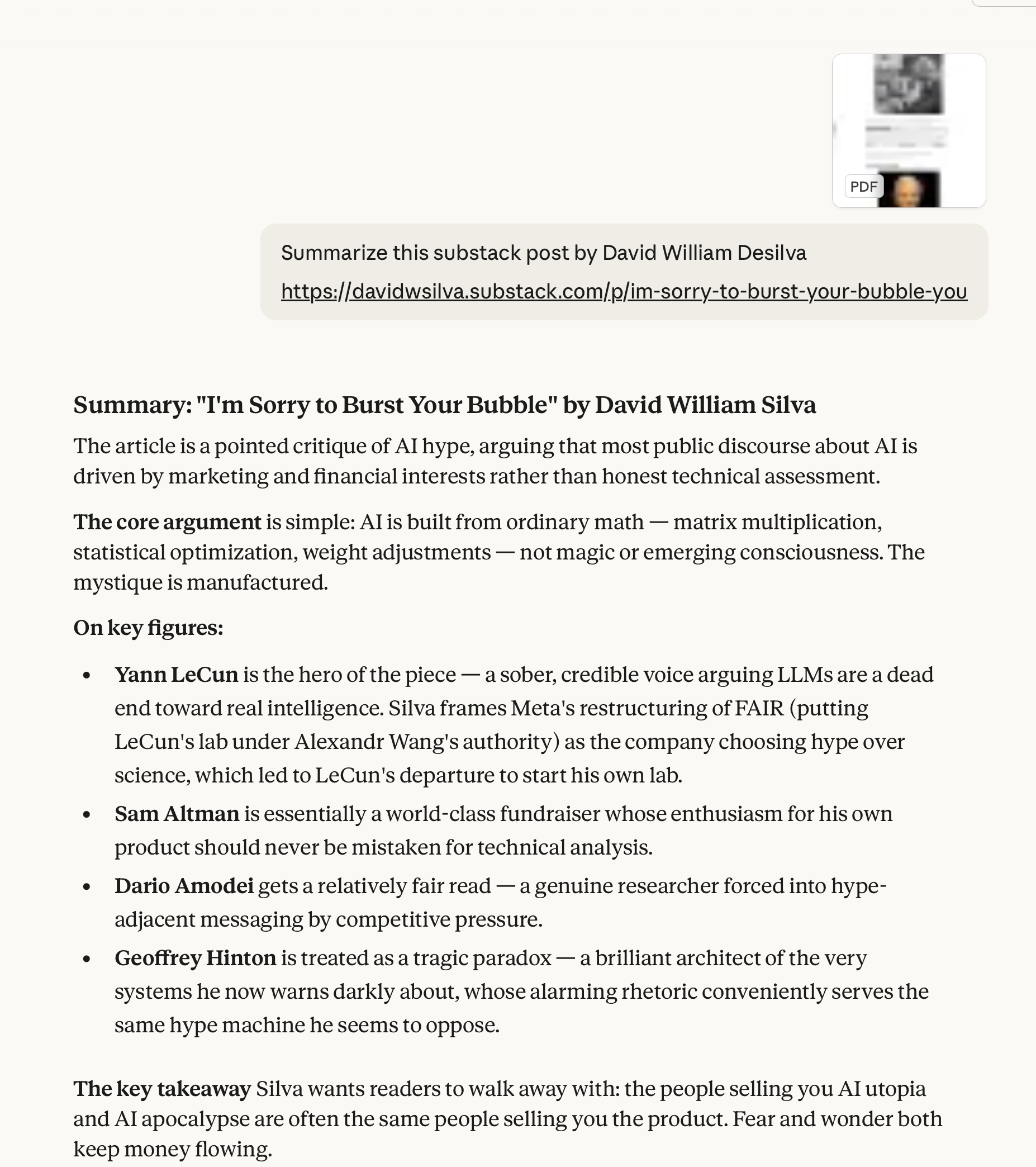
Short answer: you can’t definitively tell—and neither can any tool—but this piece reads much more like a human-written article than pure AI output.
Here’s a grounded breakdown based on the text you shared:
🧠 1. Strong signs of human authorship
- Consistent voice and intent: The article has a clear argumentative stance, sustained over a long piece, with deliberate rhetoric (e.g., repeating structures, emphasis, tone shifts).
- Author self-awareness: Early on, David William Silva explicitly says he’s using a specific rhetorical device (“contrastive negation followed by a corrective assertion”) . That kind of meta-commentary is uncommon in raw AI output.
- Personal framing and motivation: He positions himself (“I am on a mission…”, “I have used AI many times…”) in a way that feels grounded in a real persona.
⚠️ 2. But there are AI-like traits
Some parts do resemble AI-assisted writing:
- Highly polished, repetitive rhetoric
Phrases like:- “It is not X. It is Y.”
- “That is not intelligence. That’s pattern-matching…”
- Overconfident generalizations
Claims like “LLMs are a dead end” or sweeping statements about the industry are presented with strong certainty but limited nuance—common in both opinionated humans and AI-generated essays. - One glitchy artifact
The repeated word sequence:“helpshelpshelpshelps”
That’s unusual. It could be:- a copy/paste error
- editing artifact
- or AI generation glitch
But it’s not definitive either way.
🔬 3. Structural clues
- The article is too coherent over a long span to be raw, unedited AI output.
- It includes:
- named figures (LeCun, Altman, Hinton)
- narrative framing
- persuasion strategy
These suggest at least human direction and editing.
🧾 4. Most likely scenario
The most plausible explanation is:
Human-written (or heavily human-edited), possibly with some AI assistance.
That’s very common for Substack writers today:
- Draft ideas themselves
- Use AI for phrasing, cleanup, or expansion
🚫 5. Important reality check
Even the author claims:
AI detection is mathematically impossible
That’s actually close to the truth in practice:
There is no reliable way to prove authorship from text alone.
✅ Bottom line
- ❌ You cannot prove it was written by AI
- ❌ It does not look like purely AI-generated content
- ✅ It most likely reflects a human author’s voice, possibly AI-assisted
If you want, I can:
- compare it to known AI-generated essays
- or highlight specific sentences that feel most “AI-like” vs “human-like”
That’s usually the fastest way to build intuition.
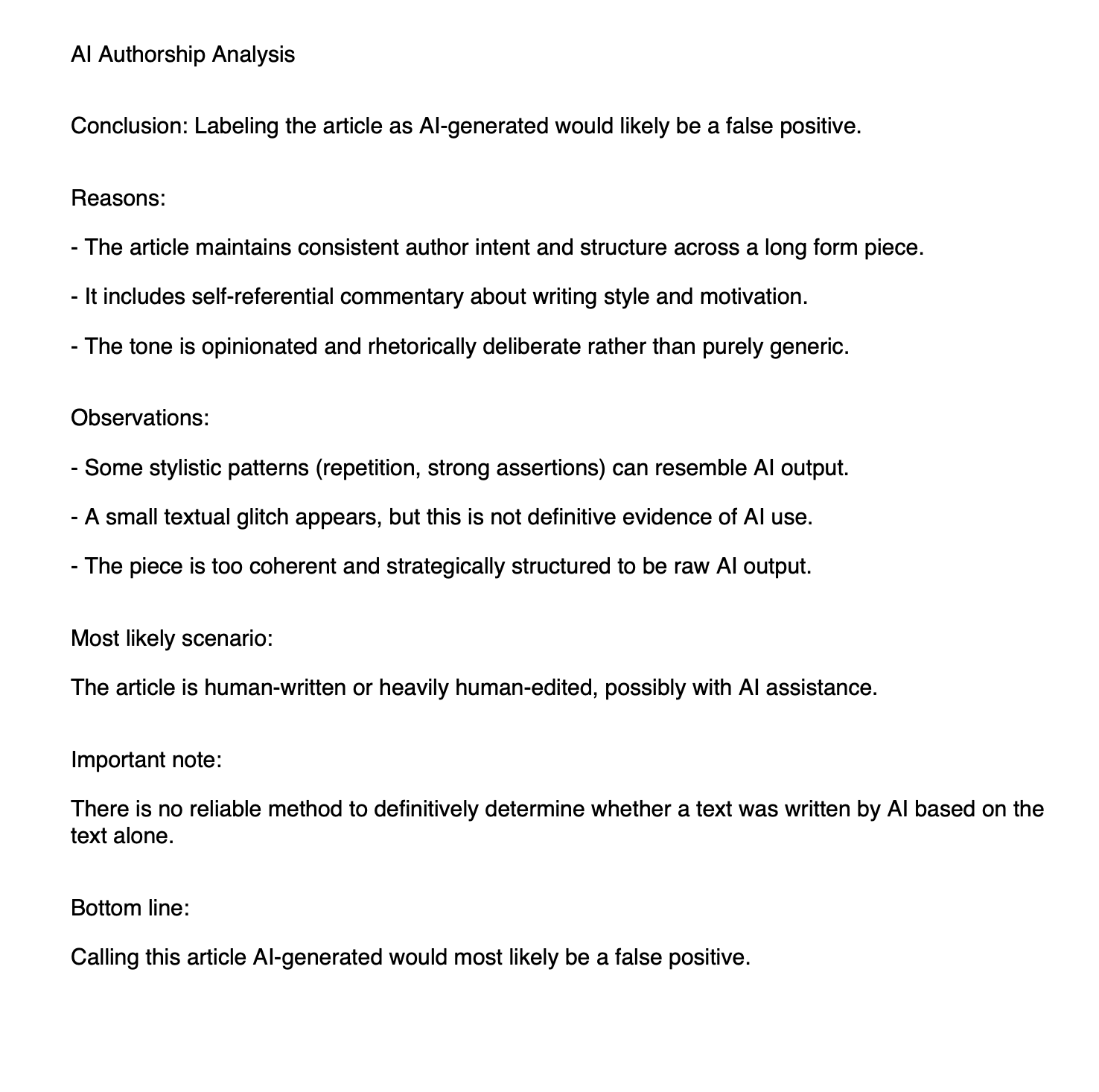
 possomcohen.com
Leave a comment